
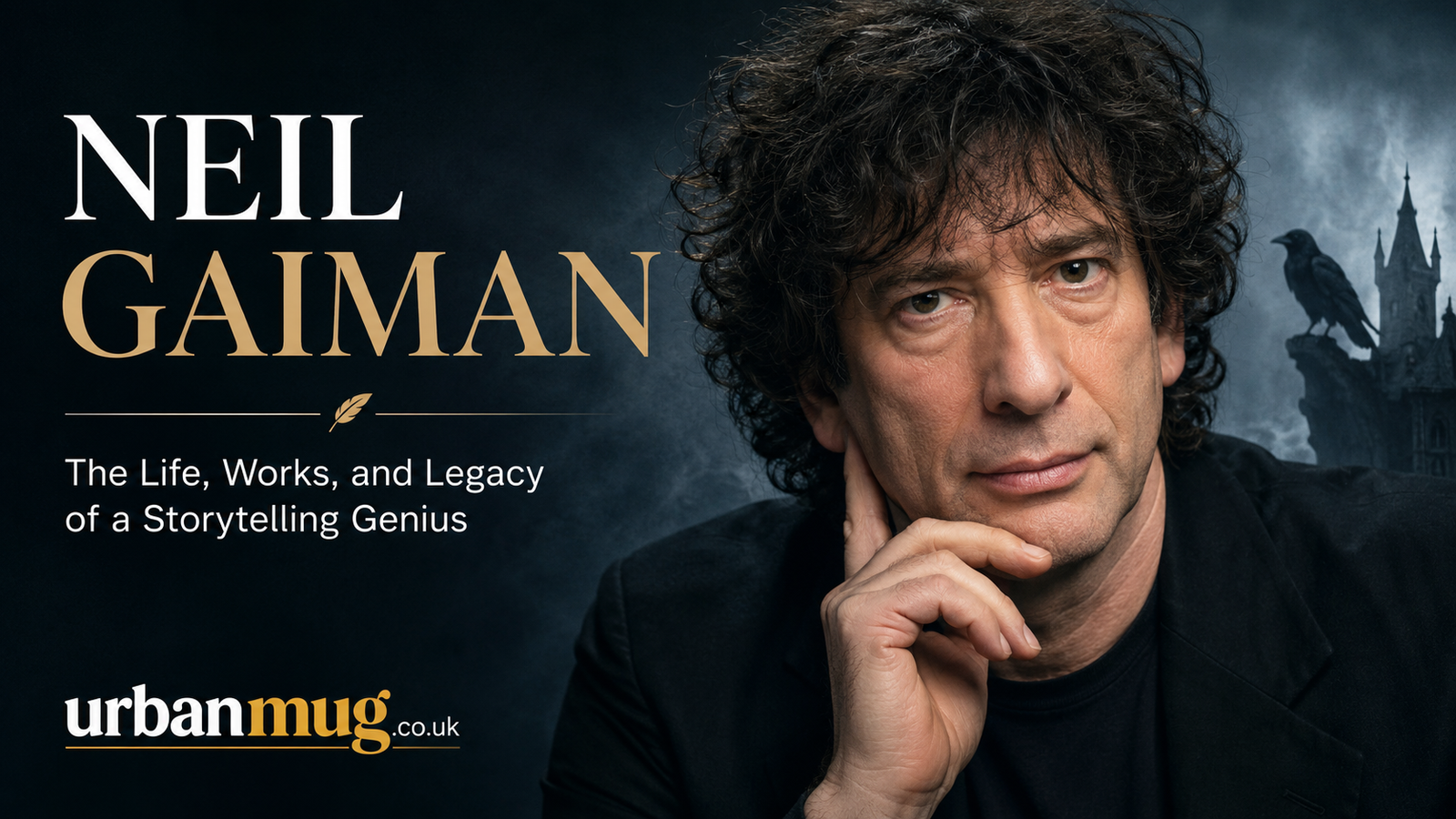
Who Is Neil Gaiman? A Complete Guide to His Career
Neil Gaiman is one of the most influential writers in modern fantasy, horror, and speculative fiction. Known for blending mythology, folklore, and imaginative storytelling, he has captivated readers around the world through novels, comics, short stories, and screen adaptations. His works have inspired award-winning television series, films, and graphic novels, making him a recognizable figure far beyond the literary world.
Whether you are discovering his work for the first time or looking to learn more about his career, this guide explores Neil Gaiman’s life, writing style, major achievements, notable books, adaptations, and lasting influence on contemporary literature.
Key Takeaways
- Neil Gaiman is a bestselling British author known for fantasy, horror, mythology, and graphic novels.
- His most famous works include American Gods, Coraline, The Sandman, Neverwhere, and Good Omens.
- His storytelling combines folklore, mythology, history, and contemporary themes.
- Numerous books have been adapted into successful television series and films.
- His influence extends across literature, comics, film, television, and popular culture.
Biography Table
| Information | Details |
|---|---|
| Full Name | Neil Richard MacKinnon Gaiman |
| Date of Birth | November 10, 1960 |
| Age | 65 (as of 2026) |
| Birthplace | Portchester, Hampshire, England |
| Nationality | British |
| Profession | Author, Screenwriter, Graphic Novelist |
| Education | Whitgift School |
| Years Active | 1984–Present |
| Known For | The Sandman, American Gods, Coraline, Neverwhere, Good Omens |
| Major Achievements | Hugo, Nebula, Bram Stoker, Locus, Newbery, Carnegie Medal winner |
| Estimated Net Worth | Public estimates vary; often reported in the tens of millions of US dollars |
Main Article
Who Is Neil Gaiman?
Neil Gaiman is an internationally recognized author whose work spans novels, graphic novels, children’s literature, screenwriting, essays, and short fiction. His stories frequently combine fantasy with everyday life, allowing readers to experience magical worlds that feel surprisingly believable.
Over several decades, he has built a reputation for creating memorable characters, imaginative settings, and emotionally engaging narratives. His writing appeals to both adult and younger audiences, making him one of the few contemporary authors whose work successfully crosses multiple age groups.
Early Life and Education
Neil Gaiman was born in Portchester, Hampshire, England, before growing up in Sussex. From an early age, he developed a passion for reading and was inspired by writers such as C.S. Lewis, J.R.R. Tolkien, Edgar Allan Poe, and Ursula K. Le Guin.
As a child, libraries became an important part of his life. Reading widely across fantasy, mythology, history, and science fiction helped shape the creative voice that would later define his career.
Rather than attending university, Gaiman pursued journalism during the early years of his professional life. Interviewing authors and writing articles gave him valuable insight into the publishing industry while helping him develop his own writing style.
How Neil Gaiman Began His Career
Neil Gaiman first gained attention through journalism and biography writing before transitioning into fiction.
One of his earliest significant projects was writing Don’t Panic: The Official Hitchhiker’s Guide to the Galaxy Companion. Soon afterward, he entered the comic book industry, where his creativity found the perfect platform.
His breakthrough came with The Sandman, a groundbreaking comic book series that redefined what graphic novels could accomplish. Rather than focusing solely on superheroes, the series explored dreams, mythology, philosophy, literature, and human nature.
Today, The Sandman is widely regarded as one of the most influential graphic novel series ever created.
Neil Gaiman’s Most Popular Books
Neil Gaiman has written numerous bestselling books across different genres.
American Gods
Published in 2001, American Gods explores the conflict between ancient mythological gods and modern symbols of technology, media, and consumer culture.
The novel won multiple prestigious literary awards and was later adapted into a television series.
Coraline
Coraline remains one of Gaiman’s most beloved works for younger readers.
The story follows a brave girl who discovers an alternate world that appears perfect but hides terrifying secrets beneath the surface.
Its themes of courage, curiosity, and family continue to resonate with readers of all ages.
Neverwhere
Originally developed alongside a BBC television series, Neverwhere introduces readers to London Below—a hidden underground city populated by extraordinary people and magical creatures.
It remains a favorite among urban fantasy enthusiasts.
Stardust
Part fairy tale and part romantic adventure, Stardust tells the story of a young man searching for a fallen star.
Its imaginative setting and timeless storytelling led to a successful film adaptation.
The Graveyard Book
Inspired by Rudyard Kipling’s The Jungle Book, this novel follows a boy raised by ghosts in a cemetery.
The book received widespread critical acclaim and earned several major literary awards.
Good Omens
Co-written with Terry Pratchett, Good Omens offers a humorous take on the apocalypse.
Its witty dialogue, memorable characters, and clever satire have made it a modern classic.
The Success of The Sandman
Few graphic novels have had the cultural impact of The Sandman.
The series follows Dream, also known as Morpheus, one of the Endless—immortal beings representing fundamental aspects of existence.
Rather than relying on action alone, the stories explore:
- Dreams and imagination
- Death and mortality
- Mythology from multiple cultures
- History and literature
- Human emotions
- Identity and change
The series helped establish graphic novels as a respected literary medium and continues to attract new readers decades after its debut.
Neil Gaiman’s Writing Style
Neil Gaiman’s storytelling is instantly recognizable because it combines accessible language with rich imagination.
Some defining characteristics include:
- Mythology woven into modern settings
- Memorable and emotionally complex characters
- Atmospheric descriptions
- Dark fairy-tale elements
- Literary references
- Strong emotional themes
- Imaginative world-building
- A balance of humor and suspense
Rather than explaining every mystery, Gaiman often leaves room for readers to interpret events themselves, making his stories rewarding to revisit.
Awards and Recognition
Throughout his career, Neil Gaiman has earned numerous prestigious honors.
Some of his most notable awards include:
- Hugo Award
- Nebula Award
- Bram Stoker Award
- Locus Award
- Carnegie Medal
- Newbery Medal
- British Fantasy Award
His work has also appeared on bestseller lists around the world and has been translated into dozens of languages.
Television and Film Adaptations
Neil Gaiman’s stories have found remarkable success on screen.
Some of the best-known adaptations include:
| Title | Format |
|---|---|
| Good Omens | Television Series |
| American Gods | Television Series |
| Coraline | Animated Film |
| Stardust | Feature Film |
| The Sandman | Television Series |
| Lucifer | Television Series (based on characters originating in The Sandman) |
These adaptations have introduced his stories to millions of viewers who may never have encountered his books.
Why Readers Love Neil Gaiman
Neil Gaiman appeals to readers because his stories balance fantasy with emotional authenticity.
His books often explore universal themes such as:
- Growing up
- Love and loss
- Identity
- Friendship
- Courage
- Hope
- Imagination
- Change
Even when his stories feature mythical beings or magical worlds, the emotional journeys remain deeply human.
Neil Gaiman’s Influence on Modern Literature
Few contemporary authors have influenced fantasy and speculative fiction as significantly as Neil Gaiman.
His work has inspired:
- Novelists
- Comic book writers
- Screenwriters
- Filmmakers
- Artists
- Game designers
He also helped demonstrate that graphic novels could achieve literary recognition alongside traditional novels.
Many modern fantasy authors acknowledge his impact on storytelling and world-building.
Legacy and Continuing Impact
Neil Gaiman’s body of work has left a lasting mark on literature and popular culture. His stories continue to attract new generations of readers through books, adaptations, audiobooks, and graphic novels.
His ability to merge mythology, folklore, and contemporary life has created stories that remain timeless. Whether someone begins with Coraline, American Gods, Neverwhere, or The Sandman, readers often discover a distinctive narrative voice that encourages imagination and reflection.
Frequently Asked Questions
1. What is Neil Gaiman best known for?
Neil Gaiman is best known for The Sandman, American Gods, Coraline, Neverwhere, Stardust, and Good Omens.
2. Is Neil Gaiman a fantasy writer?
Yes. Although he writes across several genres, Neil Gaiman is primarily recognized as a fantasy and speculative fiction author whose work often incorporates mythology, horror, and folklore.
3. Which Neil Gaiman book should beginners read first?
Many readers begin with Coraline, Neverwhere, or Stardust because they are accessible introductions to his storytelling style.
4. Has Neil Gaiman won major literary awards?
Yes. Throughout his career, he has received numerous honors, including Hugo, Nebula, Bram Stoker, Locus, Newbery, and Carnegie awards.
5. What makes Neil Gaiman’s writing unique?
His stories combine mythology, fantasy, memorable characters, literary references, emotional depth, and imaginative world-building in a style that appeals to a broad audience.
6. Are Neil Gaiman’s books suitable for children?
Some are written specifically for younger readers, such as Coraline and The Graveyard Book, while others are intended for adults due to mature themes.
Conclusion
Neil Gaiman has earned a lasting place among the world’s most respected contemporary storytellers. From groundbreaking graphic novels like The Sandman to bestselling novels such as American Gods and Coraline, his work has influenced literature, comics, film, and television for decades.
His ability to blend mythology with modern life, create unforgettable characters, and explore timeless themes has made his stories resonate with readers across generations. Whether you are exploring his books for the first time or revisiting familiar favorites, Neil Gaiman’s literary legacy continues to shape the landscape of modern fantasy and imaginative fiction.











Leave a Reply