
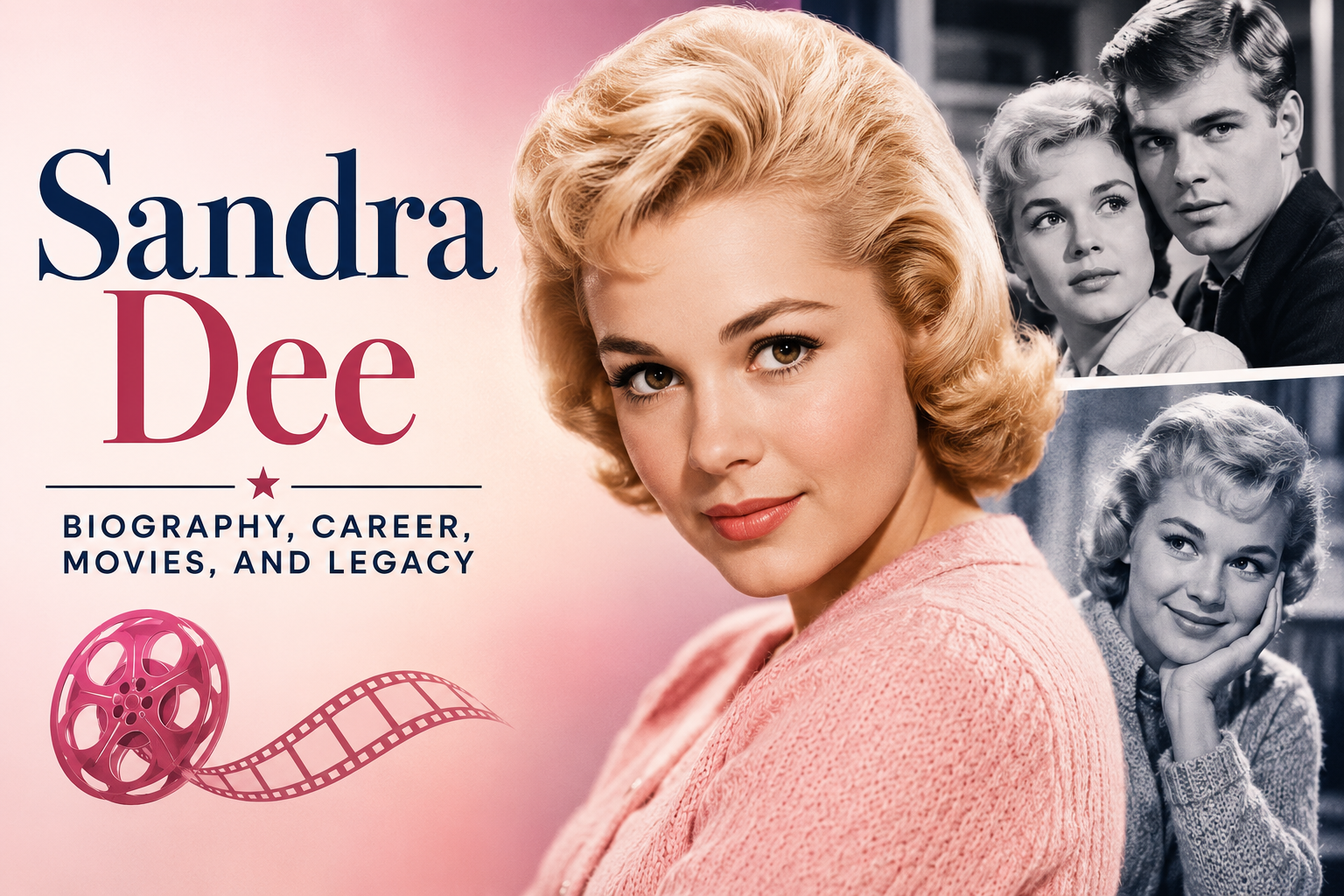
Sandra Dee: Biography, Career, Movies, and Legacy
Sandra Dee remains one of Hollywood’s most recognizable actresses of the 1950s and 1960s. Known for her wholesome screen image, memorable performances, and highly publicized marriage to singer and actor Bobby Darin, she became a cultural icon during the golden age of American cinema.
Although her career reached remarkable heights at a young age, Sandra Dee also faced significant personal struggles behind the scenes. Her story reflects both the glamour and the pressures of classic Hollywood, making her life as compelling as the films she starred in.
This comprehensive guide explores Sandra Dee’s biography, early life, acting career, famous movies, marriage, personal challenges, achievements, and enduring legacy in film history.
Key Takeaways
- Sandra Dee was one of Hollywood’s biggest stars during the late 1950s and early 1960s.
- She appeared in numerous successful romantic comedies and coming-of-age films.
- Her marriage to Bobby Darin became one of Hollywood’s most talked-about relationships.
- Despite professional success, she struggled with personal and health challenges throughout her life.
- Sandra Dee remains an influential figure in classic American cinema.
Biography Table
| Information | Details |
|---|---|
| Full Name | Alexandra Zuck |
| Stage Name | Sandra Dee |
| Date of Birth | April 23, 1942 |
| Date of Death | February 20, 2005 |
| Birthplace | Bayonne, New Jersey, United States |
| Nationality | American |
| Profession | Actress, Model |
| Years Active | 1957–1994 |
| Known For | Gidget, A Summer Place, Tammy Tell Me True, Imitation of Life |
| Major Achievements | Golden Globe Award for New Star of the Year (1960) |
| Estimated Net Worth | Public estimates vary; no verified figure is available. |
Main Article
Early Life and Childhood
Sandra Dee was born Alexandra Zuck on April 23, 1942, in Bayonne, New Jersey. Her parents divorced when she was very young, and she was largely raised by her mother, Mary Zuck, who played a significant role in managing her early career.
As a child, Sandra entered the modeling industry and quickly became one of America’s most successful young models. Her natural beauty and photogenic appearance helped her secure advertising campaigns for major brands before she even reached her teenage years.
Her early exposure to the entertainment industry paved the way for a successful transition into acting.
From Child Model to Hollywood Actress
Sandra Dee’s modeling success attracted the attention of Hollywood talent scouts. During the late 1950s, studios were searching for fresh young faces that could appeal to teenage audiences, and Sandra fit that image perfectly.
She signed with Universal Pictures, where executives carefully developed her public image as the “girl next door”—innocent, charming, and relatable.
This image resonated strongly with post-war American audiences, making her one of the era’s fastest-rising stars.
Breakthrough Role in Hollywood
Sandra Dee’s major breakthrough came with Gidget (1959).
The film told the story of a teenage girl discovering surfing culture in Southern California and became an unexpected success.
Although later adaptations of Gidget featured different actresses, Sandra Dee’s original portrayal helped establish the franchise and made her an overnight celebrity.
Her popularity among young moviegoers skyrocketed almost immediately.
Sandra Dee’s Most Famous Movies
Throughout her career, Sandra Dee appeared in numerous successful films across several genres.
Imitation of Life (1959)
This emotionally powerful drama remains one of her most critically acclaimed performances.
The film addressed complex themes including race, motherhood, identity, and family relationships.
A Summer Place (1959)
Perhaps her most commercially successful movie, A Summer Place became a cultural phenomenon.
Her on-screen chemistry with Troy Donahue captivated audiences, while the film’s famous musical theme became one of cinema’s most recognizable instrumentals.
Gidget (1959)
This coming-of-age comedy introduced millions of viewers to surfing culture and transformed Sandra Dee into a teen idol.
Tammy Tell Me True (1961)
Sandra continued her success by portraying Tammy, a cheerful and optimistic young woman navigating college life.
If a Man Answers (1962)
This romantic comedy showcased her comedic timing alongside Bobby Darin, further strengthening her popularity.
Career Highlights
Some of Sandra Dee’s biggest professional achievements include:
- Golden Globe Award for New Star of the Year
- One of Universal Pictures’ highest-paid young actresses
- Major teen idol during the late 1950s
- Starred in multiple box-office hits
- Appeared alongside many of Hollywood’s biggest actors
Her films consistently attracted younger audiences and helped define a generation of romantic comedies and youth-oriented dramas.
Sandra Dee and Bobby Darin
One of the defining chapters of Sandra Dee’s life was her relationship with singer and actor Bobby Darin.
The pair met while filming Come September in 1960 and married shortly afterward.
Their relationship attracted enormous media attention, making them one of Hollywood’s most glamorous celebrity couples.
In 1961, they welcomed their son, Dodd Mitchell Darin.
Despite their seemingly perfect public image, their marriage faced increasing challenges due to demanding careers, personal pressures, and emotional struggles.
The couple divorced in 1967.
Even after their separation, Bobby Darin reportedly maintained deep affection and respect for Sandra Dee.
Personal Struggles Behind the Fame
Behind her cheerful on-screen persona, Sandra Dee experienced numerous personal hardships.
According to later biographies and family accounts, she struggled with:
- Anxiety
- Depression
- Alcohol dependency
- Eating disorders
- Emotional trauma related to her childhood
These issues affected both her health and career.
As Hollywood evolved during the late 1960s and 1970s, opportunities for the type of roles that had made her famous became increasingly limited.
Her personal difficulties further complicated attempts to revive her acting career.
Later Career
Sandra Dee continued acting during the 1970s and early 1980s, though her appearances became less frequent.
Unlike many classic Hollywood stars who successfully reinvented themselves, she largely stepped away from major productions.
Her final acting credits reflected a quieter career compared with the remarkable success she had enjoyed as one of America’s biggest young stars.
Awards and Recognition
Although Sandra Dee’s acting career was relatively brief at its peak, she received important recognition.
| Award | Year | Result |
|---|---|---|
| Golden Globe – New Star of the Year | 1960 | Won |
| Multiple Teen Popularity Awards | Early 1960s | Honored |
While she did not receive Academy Award nominations, her influence on teen-oriented cinema remains significant.
Sandra Dee’s Acting Style
Sandra Dee developed a distinctive screen presence characterized by:
- Natural charm
- Emotional sincerity
- Girl-next-door appeal
- Strong chemistry with co-stars
- Relatable performances
These qualities helped make her one of Hollywood’s most beloved young actresses during her era.
Cultural Impact
Sandra Dee became more than just a successful actress—she became a symbol of youthful optimism in post-war America.
Her name entered popular culture through songs, television references, and films. One of the most famous examples is the musical Grease, where the lyric “Look at me, I’m Sandra Dee” references her wholesome public image.
Her influence extended beyond cinema, shaping fashion trends and ideas of teenage stardom during the late 1950s and early 1960s.
Legacy in Hollywood
Today, Sandra Dee is remembered as one of classic Hollywood’s defining stars.
Her films continue to attract audiences through television broadcasts and streaming platforms, introducing new generations to her work.
Film historians often credit her with helping establish the modern teenage movie heroine, paving the way for future actresses in coming-of-age stories and romantic dramas.
While her career had its share of triumphs and hardships, her performances remain an enduring part of American film history.
Sandra Dee’s Most Notable Films
| Film | Release Year | Role |
|---|---|---|
| Until They Sail | 1957 | Evelyn Leslie |
| The Reluctant Debutante | 1958 | Jane Broadbent |
| Gidget | 1959 | Francie “Gidget” Lawrence |
| Imitation of Life | 1959 | Susie Hubner |
| A Summer Place | 1959 | Molly Jorgenson |
| Romanoff and Juliet | 1961 | Juliet Moulsworth |
| Tammy Tell Me True | 1961 | Tammy Tyree |
| If a Man Answers | 1962 | Chantal Stacy |
Why Sandra Dee Still Matters Today
Several factors explain why Sandra Dee continues to be remembered decades after her passing:
- She represented an important era in Hollywood history.
- Her performances remain accessible and enjoyable for modern audiences.
- Her personal story highlights the challenges faced by young performers.
- She helped shape the image of the American teenage movie star.
- Her films remain classics of mid-20th-century cinema.
Frequently Asked Questions
Who was Sandra Dee?
Sandra Dee was an American actress and former child model best known for starring in popular films such as Gidget, A Summer Place, and Imitation of Life.
What was Sandra Dee’s real name?
Her birth name was Alexandra Zuck before she adopted the professional name Sandra Dee.
Was Sandra Dee married?
Yes. She married singer and actor Bobby Darin in 1960. They had one son before divorcing in 1967.
What was Sandra Dee’s most famous movie?
Many consider Gidget and A Summer Place to be her most iconic films, though Imitation of Life is widely praised by critics.
Did Sandra Dee win any awards?
Yes. She won the Golden Globe Award for New Star of the Year in 1960.
Why is Sandra Dee remembered today?
She is remembered for her contributions to classic Hollywood cinema, her influence on teenage films, and her enduring status as one of the most recognizable actresses of her generation.
Conclusion
Sandra Dee’s journey from child model to one of Hollywood’s brightest young stars is both inspiring and deeply human. Her memorable performances in films such as Gidget, A Summer Place, and Imitation of Life secured her place in cinematic history, while her personal experiences revealed the challenges that often accompanied fame during Hollywood’s golden era.
Although her career peaked early, Sandra Dee’s influence continues to resonate with film enthusiasts, historians, and new audiences discovering classic American cinema. Her story serves as a reminder that behind every celebrated public image is a complex individual whose legacy extends beyond the screen. Today, Sandra Dee remains an enduring symbol of classic Hollywood, remembered not only for her talent and beauty but also for the lasting impact she made on American film and popular culture.









Leave a Reply