
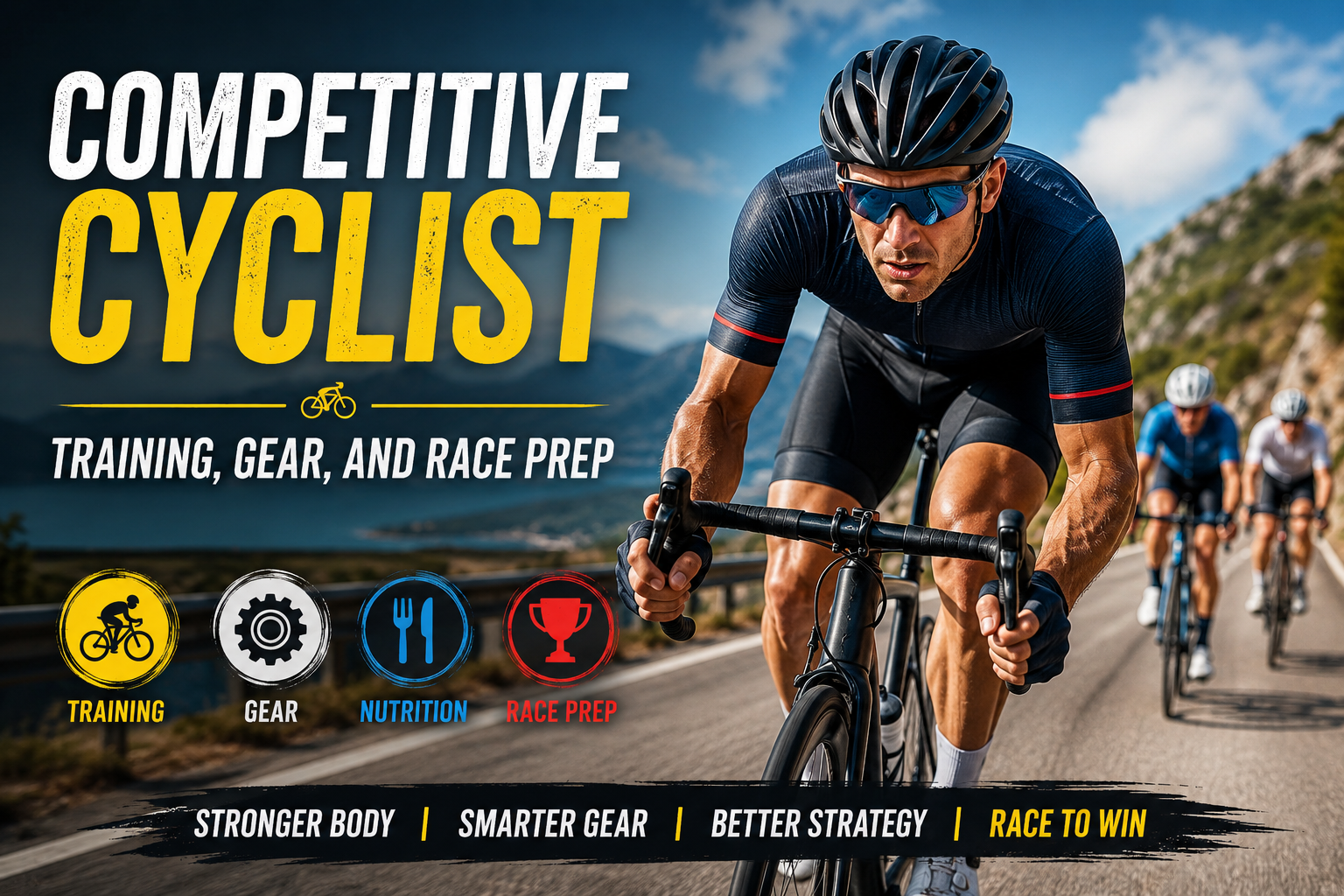
Competitive Cyclist: Training, Gear, and Race Prep
Becoming a competitive cyclist requires much more than riding a bike quickly. Success comes from combining structured training, proper nutrition, smart equipment choices, race strategy, and consistent recovery. Whether your goal is to enter your first local race or compete at a higher level, building the right habits is essential.
Cycling is one of the world’s most demanding endurance sports. Riders must develop cardiovascular fitness, muscular strength, technical handling skills, and mental resilience. At the same time, they must understand how to prepare for different race formats, manage fatigue, and continually improve performance.
This comprehensive guide explains everything you need to know about becoming a successful competitive cyclist—from selecting the right bicycle to planning race day and recovering effectively afterward.
Key Takeaways
- A competitive cyclist succeeds through consistent training rather than occasional intense workouts.
- Choosing the right bike and equipment improves both comfort and performance.
- Proper nutrition and hydration are as important as physical training.
- Recovery plays a critical role in long-term progress and injury prevention.
- Smart race tactics often make the difference between winning and simply finishing.
Main Article
What Is a Competitive Cyclist?
A competitive cyclist is someone who participates in organized cycling events where riders compete for placement or time. Unlike recreational cycling, competitive cycling follows structured training plans and performance goals.
Competitive cyclists race in several disciplines, including:
- Road racing
- Time trials
- Mountain biking
- Cyclocross
- Track cycling
- Gravel racing
- BMX racing
Each discipline demands specialized skills, equipment, and training methods, but all require dedication and consistent improvement.
Essential Skills Every Competitive Cyclist Needs
Success depends on developing multiple abilities rather than relying solely on speed.
Endurance
Endurance forms the foundation of cycling performance. Long rides improve cardiovascular efficiency and allow riders to maintain effort over extended periods.
Power
Power determines how quickly a rider can accelerate, climb hills, and sprint toward the finish line.
Bike Handling
Technical skills include:
- Cornering safely
- Descending confidently
- Riding in groups
- Braking efficiently
- Navigating different road conditions
Good handling reduces energy waste and lowers crash risk.
Mental Toughness
Competitive racing often involves fatigue, changing weather, tactical decisions, and unexpected challenges. Mental resilience helps riders stay focused under pressure.
Choosing the Right Bike
Different racing disciplines require different bicycles.
| Cycling Discipline | Recommended Bike |
|---|---|
| Road Racing | Lightweight road bike |
| Time Trial | Aerodynamic TT bike |
| Mountain Bike | Hardtail or full suspension MTB |
| Gravel Racing | Gravel bike |
| Cyclocross | Cyclocross bike |
| Track Racing | Fixed-gear track bike |
When selecting a bike, prioritize proper fit over expensive components. A well-fitted bike improves efficiency and reduces injury risk.
Essential Cycling Gear
Quality equipment contributes to both safety and performance.
Must-Have Equipment
- Certified cycling helmet
- Cycling shoes
- Clipless pedals
- Gloves
- Sunglasses
- Water bottles
- Repair kit
- Spare tube
- Mini pump
- Cycling computer or GPS
Clothing
Wear cycling apparel designed for comfort and efficiency:
- Bib shorts
- Moisture-wicking jersey
- Windproof jacket
- Arm warmers
- Leg warmers
- Rain gear
Proper clothing helps regulate body temperature during changing weather conditions.
Building an Effective Training Plan
Training should follow a structured schedule rather than random rides.
Weekly Example
| Day | Workout |
|---|---|
| Monday | Recovery ride or rest |
| Tuesday | Interval training |
| Wednesday | Endurance ride |
| Thursday | Hill repeats |
| Friday | Recovery ride |
| Saturday | Long ride |
| Sunday | Group ride or race simulation |
Consistency over several months delivers better results than occasional high-intensity sessions.
Endurance Training
Long rides improve aerobic capacity.
Typical endurance rides involve:
- Moderate intensity
- Steady pacing
- Two to five hours depending on experience
These sessions help cyclists ride efficiently while conserving energy.
Interval Training
Intervals improve speed and power.
Popular interval workouts include:
- 5 × 5-minute threshold efforts
- Sprint intervals
- VO₂ max intervals
- High-cadence drills
Recovery between intervals is just as important as the work itself.
Strength Training for Cyclists
Strength training complements cycling by improving muscular endurance and stability.
Recommended exercises include:
- Squats
- Deadlifts
- Lunges
- Step-ups
- Planks
- Romanian deadlifts
- Core rotations
Two weekly sessions are sufficient for most cyclists.
Nutrition for Peak Performance
Food fuels training and recovery.
Before Riding
Consume carbohydrate-rich meals such as:
- Oatmeal
- Rice
- Whole-grain toast
- Bananas
During Long Rides
For rides lasting over 90 minutes, consume carbohydrates regularly.
Examples include:
- Energy gels
- Bananas
- Energy bars
- Sports drinks
- Dried fruit
After Training
Recovery meals should include:
- Protein
- Complex carbohydrates
- Healthy fats
- Plenty of fluids
Chocolate milk, rice with chicken, or yogurt with fruit are excellent recovery choices.
Hydration Matters
Even mild dehydration reduces cycling performance.
General guidelines include:
- Drink before feeling thirsty.
- Increase intake in hot weather.
- Replace electrolytes during long rides.
- Monitor urine color to assess hydration.
Race Preparation
Preparing for race day begins well before the event.
One Week Before
- Reduce training volume
- Prioritize sleep
- Increase carbohydrate intake gradually
- Inspect the bicycle
One Day Before
- Charge cycling electronics
- Prepare race kit
- Check tire pressure
- Pack nutrition
- Review the course
Race Morning
Eat a familiar carbohydrate-rich breakfast two to three hours before the start. Avoid experimenting with new foods.
Race-Day Strategy
Winning is not always about being the strongest rider.
Smart tactics include:
- Staying sheltered in the peloton
- Conserving energy early
- Positioning before corners
- Responding wisely to attacks
- Timing the final sprint
Experienced racers know when to save energy and when to attack.
Common Mistakes Competitive Cyclists Make
Many beginners slow their progress by making avoidable mistakes.
These include:
- Training too hard every day
- Ignoring recovery
- Riding without a plan
- Poor bike fit
- Inadequate nutrition
- Skipping strength training
- Racing without preparation
Avoiding these habits leads to faster long-term improvement.
Recovery and Injury Prevention
Recovery is where the body adapts and becomes stronger.
Effective recovery includes:
- Seven to nine hours of quality sleep
- Proper hydration
- Balanced nutrition
- Active recovery rides
- Stretching
- Foam rolling
- Rest days
Ignoring recovery often leads to fatigue, illness, or overuse injuries.
Technology That Helps Competitive Cyclists
Modern training tools provide valuable performance insights.
Popular technologies include:
- GPS cycling computers
- Heart rate monitors
- Power meters
- Smart trainers
- Cadence sensors
- Indoor training platforms
These tools help riders monitor progress and make informed training decisions.
Mental Preparation
Physical fitness alone rarely guarantees success.
Competitive cyclists should develop:
- Confidence
- Patience
- Focus
- Race awareness
- Goal setting
- Positive self-talk
Mental preparation helps riders perform consistently during demanding races.
Sample Beginner Progression
| Experience Level | Weekly Riding Time |
|---|---|
| Beginner | 4–6 hours |
| Intermediate | 7–10 hours |
| Advanced | 10–15+ hours |
Gradually increasing training volume reduces injury risk while improving fitness.
Signs You’re Improving
Progress isn’t measured only by race results.
Other indicators include:
- Faster average speeds
- Higher sustained power
- Lower heart rate at the same effort
- Improved climbing ability
- Faster recovery between sessions
- Greater confidence in group rides
Tracking these metrics helps maintain motivation over time.
Frequently Asked Questions
1. How long does it take to become a competitive cyclist?
Most beginners can prepare for local races within six to twelve months of consistent training. Higher competition levels require several years of dedicated practice.
2. What type of bike is best for a competitive cyclist?
The ideal bike depends on the discipline. Road cyclists typically use lightweight road bikes, while mountain bikers require purpose-built mountain bikes.
3. How many days per week should a competitive cyclist train?
Most cyclists train four to six days each week, balancing hard workouts with recovery sessions.
4. Is strength training important for cyclists?
Yes. Strength training improves power, stability, injury prevention, and overall cycling efficiency when combined with regular riding.
5. What should a competitive cyclist eat before a race?
Choose a carbohydrate-rich meal that is easy to digest, such as oatmeal, toast with peanut butter, rice, or bananas, about two to three hours before the event.
6. How important is recovery after training?
Recovery is essential. Proper sleep, nutrition, hydration, and rest allow muscles to repair and fitness to improve.
7. Can beginners enter cycling races?
Absolutely. Many cycling events offer beginner-friendly categories designed for new riders to gain experience in a supportive environment.
Conclusion
Becoming a successful competitive cyclist is a long-term journey built on consistency, discipline, and continuous learning. While natural ability can help, structured training, proper nutrition, smart equipment choices, effective recovery, and thoughtful race strategy are what truly separate strong competitors from the rest.
Whether you’re preparing for your first local race or aiming for higher levels of competition, focus on steady improvement rather than quick results. Train with purpose, recover well, learn from every ride, and refine your skills over time. With patience and dedication, you’ll build the fitness, confidence, and experience needed to perform at your best and enjoy every stage of your cycling journey.








Leave a Reply