
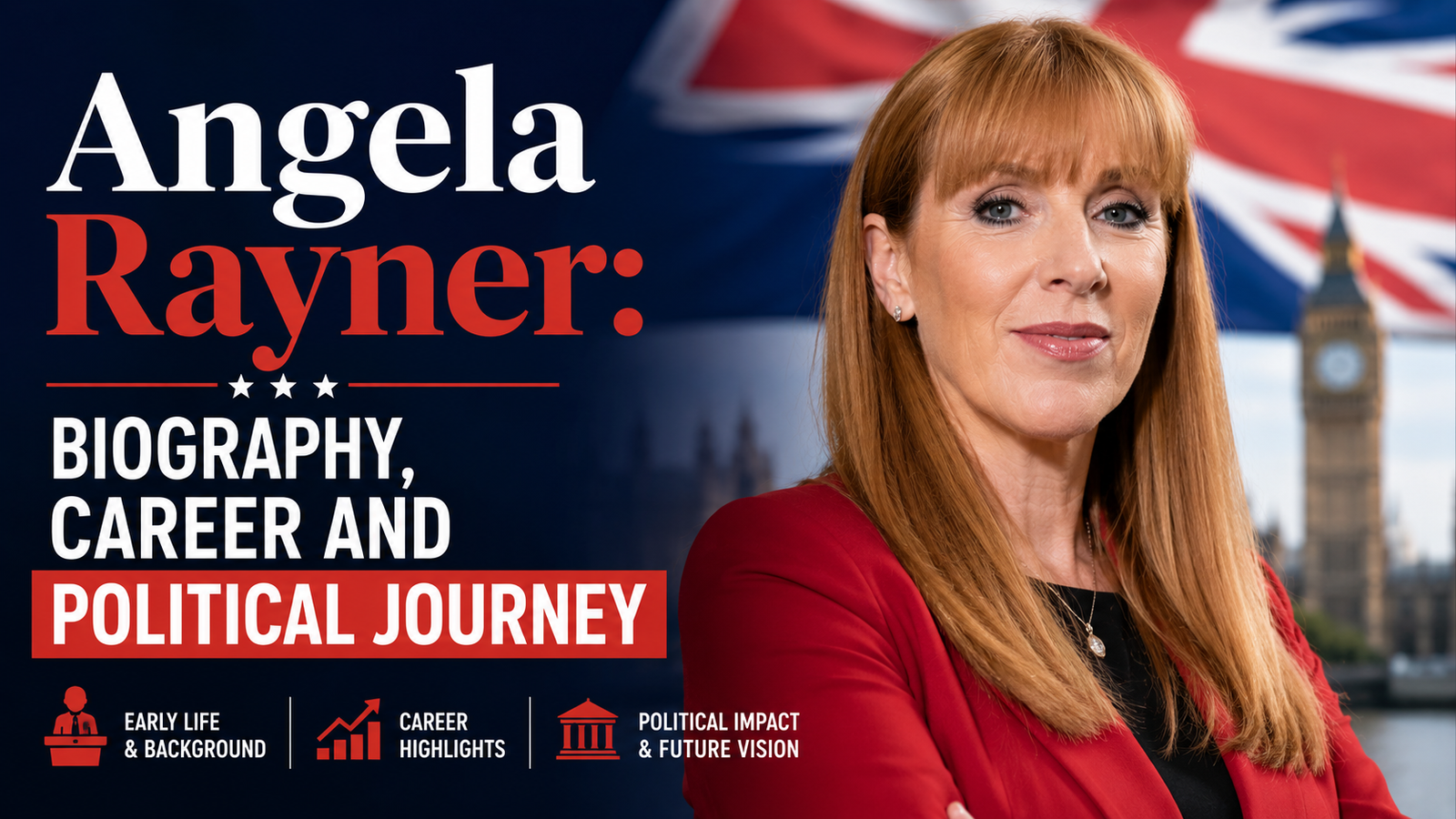
Angela Rayner: Biography, Career and Political Journey
Angela Rayner has become one of the most recognizable figures in modern British politics. Known for her straightforward communication style, strong advocacy for working people, and remarkable personal story, she has risen from humble beginnings to hold some of the highest offices in the United Kingdom.
Her journey is one of resilience, determination, and public service. From leaving school at a young age to becoming one of the Labour Party’s most influential leaders, Angela Rayner’s career reflects both personal perseverance and political ambition.
This article explores Angela Rayner’s biography, career milestones, leadership journey, political beliefs, major achievements, and lasting influence on British politics.
Key Takeaways
- Angela Rayner rose from a working-class background to become one of Britain’s leading politicians.
- She has served in several senior positions within the Labour Party and UK government.
- Her political priorities include workers’ rights, education, housing, and social equality.
- Rayner is widely recognized for her direct communication style and leadership.
- Her life story continues to inspire discussions about opportunity, education, and social mobility.
Biography Table
| Field | Information |
|---|---|
| Full Name | Angela Rayner |
| Date of Birth | 28 March 1980 |
| Age | 46 (as of 2026) |
| Birthplace | Stockport, Greater Manchester, England |
| Nationality | British |
| Profession | Politician |
| Education | Later completed qualifications through adult education |
| Years Active | 2015–Present (Member of Parliament) |
| Known For | Senior Labour Party politician and Deputy Prime Minister of the United Kingdom |
| Major Achievements | Deputy Prime Minister, Deputy Leader of the Labour Party, Secretary of State for Housing, Communities and Local Government |
| Estimated Net Worth | Not publicly confirmed |
Early Life and Background
Growing Up in Greater Manchester
Angela Rayner was born in Stockport and raised in a working-class family in Greater Manchester. She has often spoken openly about the financial challenges her family faced during her childhood.
Raised primarily by her mother, who experienced significant health challenges, Rayner has described her upbringing as one that shaped her understanding of poverty, public services, and community support.
These early experiences later became central to her political identity and policy priorities.
Leaving School at an Early Age
Rayner left school at the age of 16 without formal qualifications. Unlike many senior politicians, she did not follow a traditional university route.
Instead, she entered the workforce while continuing to develop her education through adult learning programs. She has frequently highlighted lifelong learning as an example that education should remain accessible throughout adulthood.
Career Before Politics
Before entering Parliament, Angela Rayner worked as a care worker supporting elderly people.
Her experience in social care gave her first-hand knowledge of the pressures facing healthcare workers, local services, and vulnerable communities.
She later became active in the trade union movement through UNISON, one of the UK’s largest public sector unions.
Working within the union allowed her to represent employees, negotiate workplace issues, and develop leadership skills that would later prove valuable in politics.
Entry into Politics
Becoming a Member of Parliament
Angela Rayner was elected as the Member of Parliament (MP) for Ashton-under-Lyne in 2015.
Her election came during a period of significant political change in Britain. She quickly established herself as an energetic parliamentary voice with a focus on education, employment, social care, and workers’ rights.
Rapid Rise Within Labour
Unlike many politicians who spend years on the back benches, Rayner progressed rapidly through the Labour Party.
Her communication skills, debating ability, and connection with grassroots members helped her gain increasing responsibility.
She served in several shadow ministerial positions before becoming one of Labour’s senior leaders.
Leadership Within the Labour Party
Deputy Leader
In 2020, Angela Rayner was elected Deputy Leader of the Labour Party.
The position made her one of the party’s most senior elected officials and placed her at the center of Labour’s efforts to rebuild support across the United Kingdom.
As Deputy Leader, she has frequently represented the party in Parliament, media interviews, and national political debates.
Working Alongside the Party Leadership
Rayner has played an important role in presenting Labour’s policies on:
- Economic growth
- Housing
- Employment
- Local government
- Public services
- Constitutional reform
She has often emphasized unity within the party while maintaining her own distinctive political voice.
Role in Government
Following Labour’s victory in the 2024 United Kingdom general election, Angela Rayner entered government in several senior positions.
Among her responsibilities have been:
- Deputy Prime Minister
- Secretary of State for Housing, Communities and Local Government
These roles place her at the heart of government decision-making.
Housing Reform
Housing has become one of Rayner’s key policy areas.
Her department has focused on issues such as:
- Increasing housing supply
- Supporting local communities
- Planning reform
- Affordable housing
- Local government investment
Housing policy remains one of the defining aspects of her ministerial work.
Political Priorities
Angela Rayner has consistently focused on policies affecting everyday working people.
Workers’ Rights
Throughout her political career, she has supported:
- Fair wages
- Secure employment
- Better workplace protections
- Strong trade unions
- Improved working conditions
Her background in the union movement has strongly influenced these priorities.
Education
Education remains another major focus.
Having left school without qualifications before returning to education later in life, Rayner frequently advocates:
- Adult education
- Skills training
- Equal educational opportunities
- Support for disadvantaged students
Social Mobility
Rayner regularly discusses the importance of creating opportunities regardless of family background.
She argues that talent should never be limited by economic circumstances.
Political Style
Angela Rayner is known for her direct, conversational speaking style.
Supporters often describe her as:
- Authentic
- Relatable
- Passionate
- Practical
- Straightforward
Critics sometimes argue that her approach can be confrontational, but even political opponents often acknowledge her ability to connect with ordinary voters.
Major Achievements
Some of Angela Rayner’s most significant achievements include:
| Achievement | Significance |
|---|---|
| Election as MP (2015) | Entered Parliament representing Ashton-under-Lyne |
| Deputy Leader of Labour | Became one of the party’s most senior elected figures |
| Deputy Prime Minister | Reached one of the highest offices in UK government |
| Housing Secretary | Led national housing and local government policy |
| Trade Union Leadership | Represented public sector workers before Parliament |
Personal Life
Angela Rayner has occasionally discussed aspects of her personal life publicly, particularly where they relate to wider social issues.
She became a mother at a young age and has spoken about balancing family responsibilities with work.
Rather than presenting her background as unusual, she often uses her own experiences to highlight broader discussions around childcare, education, and employment opportunities.
Leadership Qualities
Several qualities have defined Angela Rayner’s leadership.
Resilience
Her rise from a difficult childhood to senior government office demonstrates determination and persistence.
Communication
Rayner is known for communicating complex political issues in accessible language.
Advocacy
She has consistently advocated for workers, local communities, and public services.
Practical Experience
Unlike many career politicians, Rayner’s background in social care and trade union work gives her practical experience outside Westminster.
Public Image
Angela Rayner attracts both strong support and criticism, reflecting her prominent role in British politics.
Many supporters view her as someone who represents working-class communities and understands the challenges facing ordinary families.
Others debate her political positions, leadership style, or policy proposals.
Regardless of political opinion, few dispute that she has become one of the defining political figures of her generation.
Influence on British Politics
Angela Rayner’s political journey reflects broader changes within British politics.
Her career demonstrates that political leadership can emerge from diverse educational and professional backgrounds.
She has also helped broaden conversations about:
- Working-class representation
- Adult education
- Women’s leadership
- Public services
- Economic opportunity
- Housing reform
- Regional development
As one of the country’s most senior elected officials, her decisions continue to influence national policy and political debate.
Challenges and Future Outlook
Holding senior government office brings significant responsibilities.
Among the ongoing challenges facing Angela Rayner are:
- Addressing housing shortages
- Supporting local authorities
- Delivering planning reforms
- Balancing economic growth with community needs
- Maintaining public confidence in government
How these priorities develop will continue to shape both her political legacy and the wider direction of British politics.
Frequently Asked Questions
Who is Angela Rayner?
Angela Rayner is a British politician who serves as Deputy Prime Minister of the United Kingdom and is a senior figure in the Labour Party.
What is Angela Rayner known for?
She is known for her working-class background, trade union experience, leadership within the Labour Party, and work on housing, local government, and workers’ rights.
Which constituency does Angela Rayner represent?
She represents Ashton-under-Lyne as a Member of Parliament.
What did Angela Rayner do before politics?
Before entering politics, she worked as a care worker and later became a trade union representative with UNISON.
Does Angela Rayner have a university degree?
No. She left school at 16 but later completed further education through adult learning programs.
What government position does Angela Rayner hold?
She serves as Deputy Prime Minister and Secretary of State for Housing, Communities and Local Government.
What are Angela Rayner’s main political priorities?
Her priorities include workers’ rights, affordable housing, education, local government, economic opportunity, and stronger public services.
Conclusion
Angela Rayner’s biography is a compelling example of determination, resilience, and public service. From her early years in Greater Manchester to becoming one of the United Kingdom’s most senior political leaders, her career reflects a commitment to representing working people and expanding opportunity.
Her background in social care and the trade union movement has shaped her political priorities, while her leadership roles within the Labour Party and government have positioned her at the center of major national decisions. Whether viewed through the lens of housing reform, workers’ rights, education, or local government, Angela Rayner continues to play a significant role in shaping contemporary British politics.
As her political journey evolves, her influence on policy, leadership, and public debate is likely to remain an important part of the UK’s political landscape for years to come.











Leave a Reply