
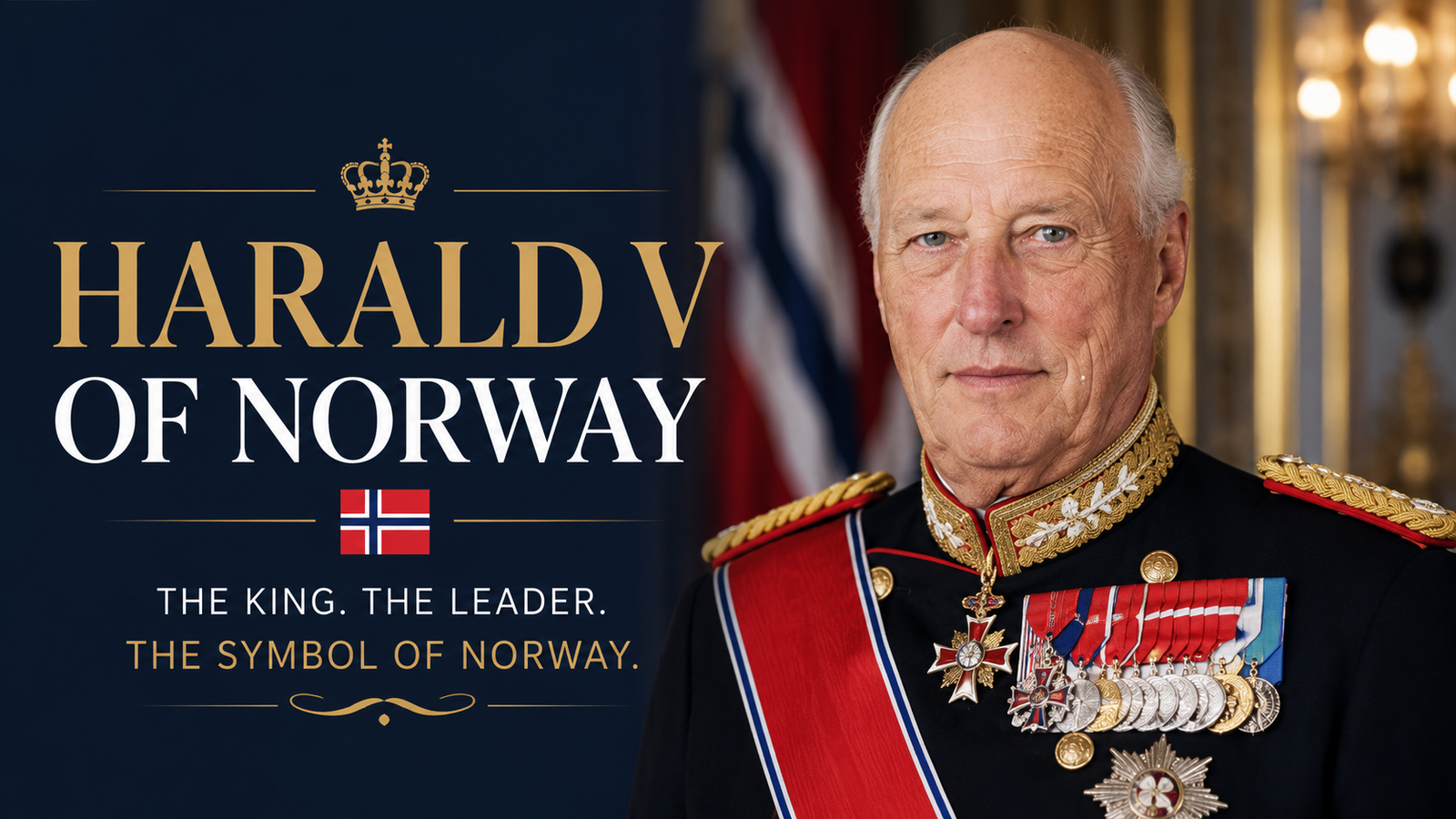
Harald V of Norway: Life, Family, and Reign Explained
Harald V of Norway has served as the King of Norway for more than three decades, guiding the country through periods of social, political, and economic change while remaining one of its most respected public figures. Known for his dedication to constitutional duty, approachable personality, and commitment to national unity, King Harald has become a symbol of stability in modern Norway.
As the ceremonial head of state, Harald V represents the country’s traditions while embracing a modern vision of the monarchy. His reign has been marked by significant national events, international diplomacy, and a strong emphasis on inclusion and public service.
This article explores Harald V of Norway’s early life, education, royal family, path to the throne, major achievements, leadership style, and lasting legacy.
Key Takeaways
- Harald V has been King of Norway since 1991.
- He belongs to the House of Glücksburg and is Norway’s first Norwegian-born king in centuries.
- His marriage to Queen Sonja helped modernize perceptions of the Norwegian monarchy.
- He serves as Norway’s constitutional monarch rather than a political leader.
- Harald V is widely respected for promoting unity, democracy, and national identity.
Biography Table
| Information | Details |
|---|---|
| Full Name | Harald V of Norway |
| Date of Birth | 21 February 1937 |
| Age | 89 (as of 2026) |
| Birthplace | Skaugum, Asker, Norway |
| Nationality | Norwegian |
| Profession | King of Norway |
| Education | Norwegian Military Academy; Balliol College, University of Oxford |
| Years Active | 1955–Present |
| Known For | King of Norway since 1991 |
| Major Achievements | Modernizing the monarchy, strengthening national unity, promoting constitutional democracy |
| Estimated Net Worth | Not officially disclosed |
Main Article
Early Life and Family Background
Harald V was born on 21 February 1937 at Skaugum Estate near Oslo. He is the son of King Olav V and Crown Princess Märtha. His birth carried historical significance because he became the first Norwegian prince born in Norway in over 500 years.
During World War II, Norway was occupied by Nazi Germany. The royal family was forced into exile, with Harald spending part of his childhood in the United States alongside his mother and sisters. These experiences shaped his understanding of leadership, resilience, and national identity.
Following the end of the war in 1945, the family returned to Norway, where Harald continued his education and gradually prepared for future royal responsibilities.
Education and Military Training
Harald V received a well-rounded education focused on academics, leadership, and military service.
His educational journey included:
- Oslo Cathedral School
- Norwegian Military Academy
- Cavalry Officer Candidate School
- Balliol College, University of Oxford, where he studied history, economics, and politics
Military service has remained an important part of his royal duties. Throughout his life, Harald has maintained close ties with Norway’s armed forces and regularly participates in military ceremonies and official events.
Becoming Crown Prince
In 1957, Harald’s grandfather, King Haakon VII, passed away.
His father became King Olav V, making Harald the new Crown Prince of Norway.
As Crown Prince, Harald represented Norway at international events, state visits, and diplomatic meetings. He also became increasingly involved in public life by supporting charities, cultural organizations, youth initiatives, and sporting events.
These decades of preparation gave him extensive experience before ascending the throne.
Marriage to Queen Sonja
One of the defining moments of Harald’s life was his relationship with Sonja Haraldsen.
At the time, marrying a commoner was controversial within royal circles. The couple reportedly waited nearly nine years before receiving approval to marry.
They married on 29 August 1968, a decision that marked an important turning point for the Norwegian monarchy.
Their marriage demonstrated that tradition could evolve while preserving the institution’s integrity.
Today, Queen Sonja is widely admired for her support of cultural, educational, and humanitarian causes.
The couple has two children:
| Child | Title |
|---|---|
| Princess Märtha Louise | Princess of Norway |
| Crown Prince Haakon | Heir to the Norwegian throne |
Ascending the Throne
Harald became King of Norway on 17 January 1991 following the death of King Olav V.
His coronation did not follow the traditional medieval ceremony. Instead, Norway held a blessing ceremony at Nidaros Cathedral in Trondheim, reflecting the country’s modern constitutional traditions.
Since then, King Harald has faithfully fulfilled his constitutional duties while remaining politically neutral.
The Role of Harald V as Constitutional Monarch
Norway is a constitutional monarchy, meaning political authority rests with the elected government and Parliament.
The King’s constitutional responsibilities include:
- Opening Parliament each year
- Appointing the Prime Minister following parliamentary procedures
- Hosting foreign heads of state
- Representing Norway internationally
- Signing legislation after parliamentary approval
- Supporting national celebrations and commemorations
Although these responsibilities are largely ceremonial, they remain important symbols of Norway’s democratic system.
Leadership Style and Public Image
King Harald is often praised for his calm, approachable, and inclusive leadership.
His speeches frequently emphasize:
- Democracy
- Equality
- Freedom
- Respect
- Community
- National unity
One of his most memorable public addresses highlighted that Norwegians come from diverse backgrounds, religions, cultures, and family structures, reinforcing the idea that everyone belongs within Norwegian society.
This message strengthened his reputation as a unifying national figure.
Contributions to Norwegian Society
Throughout his reign, Harald V has supported numerous causes that extend beyond ceremonial duties.
Promoting National Unity
Following national tragedies and difficult moments, the King has often addressed the nation with messages of hope and resilience.
His speeches have become important moments of reflection for many Norwegians.
Supporting Culture
The royal family regularly promotes:
- Norwegian arts
- Literature
- Museums
- Music
- National heritage
- Traditional celebrations
Their involvement helps preserve Norway’s rich cultural identity.
Environmental Awareness
Although government policy is determined by elected officials, King Harald has consistently shown support for sustainable development and environmental stewardship through speeches and public engagements.
Passion for Sports
Harald V has long been known for his love of sports.
He represented Norway as a sailor in international competitions and competed in several Olympic Games.
His achievements include participation in:
- 1964 Tokyo Olympics
- 1968 Mexico City Olympics
- 1972 Munich Olympics
He has also won world championships in sailing and remains a respected figure within the international sailing community.
His passion for sports has helped strengthen the connection between the monarchy and the Norwegian public.
International Diplomacy
King Harald regularly hosts state visits and undertakes diplomatic missions abroad.
These visits help strengthen Norway’s relationships with other nations through:
- Cultural exchanges
- Economic cooperation
- Diplomatic dialogue
- International goodwill
While foreign policy is directed by the government, the King’s role enhances Norway’s international image.
Challenges During His Reign
Like many modern monarchs, Harald V has faced several challenges.
These include:
- Balancing royal tradition with modern expectations
- Addressing changing public attitudes toward monarchy
- Managing health concerns in later years
- Supporting the institution through periods of public scrutiny
Despite these challenges, public approval of King Harald has remained consistently high.
Health and Later Years
As one of Europe’s longest-serving monarchs, Harald has experienced several health issues in recent years.
He has undergone medical procedures and periods of recovery but has generally resumed official duties after treatment.
During temporary absences, Crown Prince Haakon has served as Regent, ensuring continuity of royal responsibilities.
Harald V’s Legacy
Harald V’s legacy extends beyond ceremonial duties.
His reign has strengthened public confidence in Norway’s constitutional monarchy through openness, dignity, and dedication.
Key aspects of his legacy include:
- Modernizing the monarchy while respecting tradition
- Promoting inclusivity and national unity
- Maintaining political neutrality
- Supporting charitable organizations
- Representing Norway with integrity on the global stage
Many historians consider him one of Norway’s most respected modern monarchs.
Timeline of Major Events
| Year | Event |
|---|---|
| 1937 | Born at Skaugum Estate |
| 1940 | Escaped Norway during World War II |
| 1945 | Returned to Norway after the war |
| 1957 | Became Crown Prince |
| 1968 | Married Sonja Haraldsen |
| 1991 | Became King of Norway |
| 2005 | Celebrated 100 years of Norway’s independence alongside national commemorations |
| 2021 | Marked 30 years on the Norwegian throne |
Why Harald V Remains Popular
Several factors explain King Harald’s enduring popularity.
- He is viewed as approachable and genuine.
- He consistently emphasizes unity over division.
- He has respected constitutional boundaries throughout his reign.
- His speeches often resonate with ordinary citizens.
- He represents continuity during times of change.
His combination of humility and dedication has helped maintain public trust in Norway’s monarchy.
Frequently Asked Questions
Who is Harald V of Norway?
Harald V is the King of Norway. He ascended the throne on 17 January 1991 following the death of his father, King Olav V.
When was Harald V born?
He was born on 21 February 1937 at Skaugum Estate in Asker, Norway.
Who is Harald V’s wife?
Harald V is married to Queen Sonja. They were married in 1968 after receiving approval for what was then considered an unconventional royal marriage.
Who will succeed Harald V?
His son, Crown Prince Haakon, is first in line to the Norwegian throne.
What powers does Harald V have?
As a constitutional monarch, his role is primarily ceremonial. Political decisions are made by Norway’s elected government and Parliament.
Did Harald V compete in the Olympics?
Yes. Harald V represented Norway in sailing at the Olympic Games and has also earned international recognition in competitive sailing.
Why is Harald V respected in Norway?
He is respected for his dedication to public service, inclusive leadership, commitment to constitutional democracy, and ability to unite the nation during important moments.
Conclusion
Harald V of Norway has spent decades serving his country with dignity, stability, and a deep sense of duty. From his childhood during World War II to his long reign as king, he has witnessed and helped guide Norway through significant historical and social changes.
His commitment to constitutional principles, national unity, and public service has made him one of Europe’s most admired monarchs. Alongside Queen Sonja and the wider royal family, he has contributed to a modern monarchy that remains closely connected to the Norwegian people while honoring centuries of tradition.
As Norway continues to evolve, Harald V’s legacy stands as one of steady leadership, inclusivity, and unwavering dedication to the nation he has served throughout his life.











Leave a Reply