
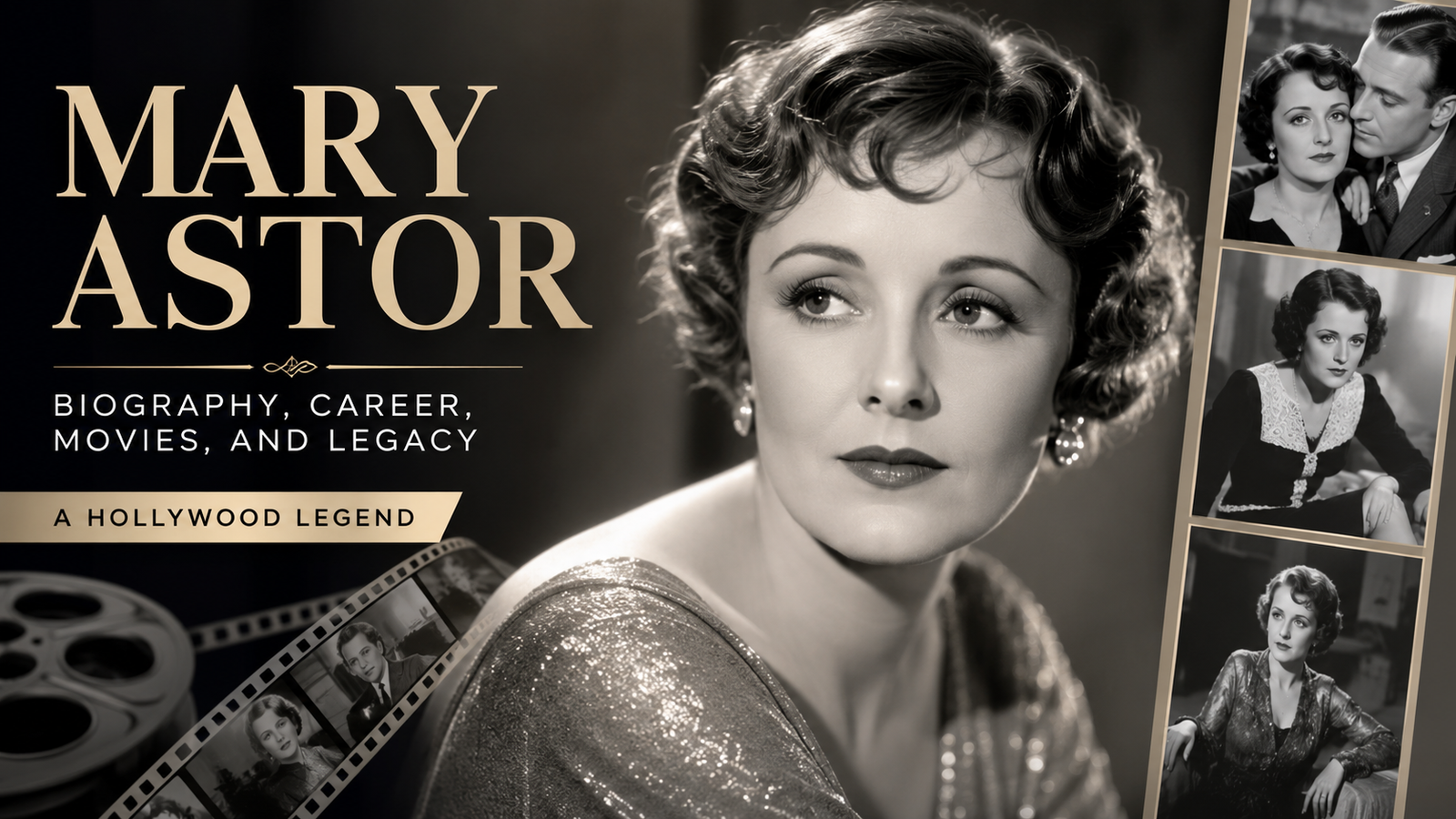
Mary Astor: Biography, Career, Movies, and Legacy
Mary Astor remains one of the most fascinating figures of Hollywood’s Golden Age. Celebrated for her remarkable acting talent, she built a career that spanned more than four decades, appearing in silent films, classic dramas, mysteries, and award-winning performances. Beyond the screen, her life attracted public attention because of personal controversies that often overshadowed her extraordinary achievements.
Today, Mary Astor is remembered not only as an Academy Award-winning actress but also as a resilient woman who successfully reinvented herself throughout a rapidly changing entertainment industry. From starring in timeless classics such as The Maltese Falcon to earning widespread acclaim for The Great Lie, her influence continues to inspire film historians and classic movie enthusiasts.
This comprehensive guide explores Mary Astor’s biography, career milestones, most memorable movies, personal life, achievements, and enduring legacy in Hollywood history.
Key Takeaways
- Mary Astor was one of Hollywood’s most respected actresses during the Golden Age of cinema.
- She successfully transitioned from silent films to talking pictures and remained relevant for decades.
- She won the Academy Award for Best Supporting Actress for The Great Lie (1941).
- Her role in The Maltese Falcon remains one of the defining performances of film noir.
- Despite personal controversies, her professional accomplishments secured her place in film history.
Biography Table
| Information | Details |
|---|---|
| Full Name | Lucile Vasconcellos Langhanke |
| Stage Name | Mary Astor |
| Date of Birth | May 3, 1906 |
| Age | Died at age 81 (1987) |
| Birthplace | Quincy, Illinois, United States |
| Nationality | American |
| Profession | Actress, Author |
| Years Active | 1920–1964 |
| Known For | The Maltese Falcon, The Great Lie, Meet Me in St. Louis |
| Major Achievements | Academy Award for Best Supporting Actress (1942, for The Great Lie) |
| Estimated Net Worth | Not reliably documented publicly |
Main Article
Early Life and Background
Mary Astor was born Lucile Vasconcellos Langhanke on May 3, 1906, in Quincy, Illinois. Her parents recognized her artistic abilities at a young age and encouraged her interest in performing.
As a teenager, she entered beauty contests and eventually caught the attention of Hollywood talent scouts. During the silent film era, studios constantly searched for fresh faces, and Astor’s expressive appearance and natural screen presence helped her stand out.
She adopted the stage name Mary Astor, beginning a journey that would make her one of the industry’s most respected actresses.
Beginning Her Hollywood Career
Mary Astor signed her first film contract during the early 1920s when silent cinema dominated American entertainment.
Her early films allowed audiences to appreciate her expressive acting style, which relied heavily on facial expressions and body language. Unlike many silent film stars, Astor successfully adapted when synchronized sound transformed Hollywood in the late 1920s.
This transition proved crucial, as numerous silent-era performers struggled with the arrival of talking pictures.
Rising to Stardom
Throughout the 1930s, Mary Astor steadily established herself as one of Hollywood’s dependable leading ladies and supporting actresses.
She appeared alongside many of the era’s biggest stars while working with leading studios.
Some characteristics that defined her performances included:
- Emotional depth
- Sophisticated screen presence
- Versatility across genres
- Strong dramatic abilities
- Memorable supporting roles
Rather than relying solely on glamour, Astor earned respect through consistently strong performances.
Mary Astor’s Most Famous Movies
Over her long career, Mary Astor appeared in more than 100 films.
Some of her best-known works include:
| Film | Year | Significance |
|---|---|---|
| The Maltese Falcon | 1941 | Classic film noir starring Humphrey Bogart |
| The Great Lie | 1941 | Academy Award-winning performance |
| Meet Me in St. Louis | 1944 | Popular musical starring Judy Garland |
| Palm Beach Story | 1942 | Successful romantic comedy |
| Dodsworth | 1936 | Critically acclaimed drama |
| Little Women | 1933 | Adaptation of the beloved novel |
Each film showcased a different aspect of her talent, proving she could excel in both dramatic and lighter roles.
Academy Award Success
Mary Astor reached one of the highest points of her career with her performance in The Great Lie.
Her portrayal earned her the Academy Award for Best Supporting Actress, recognizing years of dedication and exceptional acting.
The award cemented her reputation as one of Hollywood’s finest performers and opened doors to even more prestigious roles.
The Lasting Impact of The Maltese Falcon
Among Mary Astor’s many films, The Maltese Falcon remains her most iconic.
Directed by John Huston, the movie became one of cinema’s greatest examples of film noir.
Astor played Brigid O’Shaughnessy, a mysterious woman whose motives remain uncertain throughout the story. Her chemistry with Humphrey Bogart helped make the film unforgettable.
Today, the movie is frequently studied in film schools and continues to appear on lists of the greatest American films ever made.
Acting Style and Strengths
Mary Astor’s performances were admired for their subtlety and realism.
Her strengths included:
- Convincing emotional performances
- Excellent dialogue delivery
- Strong character development
- Ability to portray both sympathetic and morally complex characters
Unlike many stars who became associated with one type of role, Astor demonstrated remarkable versatility throughout her career.
Personal Life and Public Challenges
Although Mary Astor enjoyed enormous professional success, her private life often attracted widespread media attention.
She experienced multiple marriages and divorces, which were heavily covered by newspapers.
Perhaps the most famous controversy involved a custody dispute over her daughter during the 1930s. Personal diary entries became public during court proceedings, generating sensational headlines across the United States.
Despite intense public scrutiny, Astor continued acting successfully, demonstrating remarkable resilience during a period when scandals often ended Hollywood careers.
Life Beyond Acting
Mary Astor was also an accomplished writer.
Following her acting career, she published memoirs that offered thoughtful reflections on Hollywood, fame, and personal growth.
Her writing displayed intelligence, honesty, and self-awareness, allowing readers to see a more personal side of the actress beyond the glamorous public image.
She gradually retired from acting during the 1960s after decades of consistent work.
Major Career Achievements
Mary Astor accomplished numerous milestones throughout her career.
Highlights include:
- Appeared in more than 100 films.
- Successfully transitioned from silent films to sound films.
- Won the Academy Award for Best Supporting Actress.
- Starred in one of the greatest film noir classics.
- Worked alongside many of Hollywood’s legendary actors and directors.
- Built a successful career spanning over four decades.
- Published respected autobiographical works.
Mary Astor’s Influence on Hollywood
Mary Astor’s career illustrates how adaptability and talent can sustain success across changing eras of filmmaking.
She influenced future generations by demonstrating that actresses could thrive in both leading and supporting roles while continuously evolving their craft.
Film historians frequently cite her work when discussing:
- Golden Age Hollywood
- Film noir
- Women’s roles in classic cinema
- The transition from silent films to sound
- Character acting excellence
Her performances remain accessible to modern audiences, ensuring her legacy continues.
Why Mary Astor Still Matters Today
Although decades have passed since her final screen appearance, Mary Astor continues to attract interest from movie lovers, historians, and students of classic cinema.
Several factors explain her enduring relevance:
- She appeared in multiple landmark Hollywood films.
- Her performances remain critically respected.
- She experienced nearly every major transition in early American filmmaking.
- Her personal story reflects both the glamour and pressures of classic Hollywood.
- Her memoirs provide valuable historical insight into the entertainment industry.
As streaming platforms and film restoration projects introduce classic movies to new audiences, Mary Astor’s work continues to gain appreciation.
Legacy
Mary Astor’s legacy extends beyond awards and famous performances.
She represents an era when Hollywood evolved into a global entertainment powerhouse. Her ability to reinvent herself, overcome personal hardship, and consistently deliver memorable performances earned lasting respect within the film industry.
Whether remembered for her Oscar-winning role, her unforgettable performance in The Maltese Falcon, or her contributions to classic American cinema, Mary Astor remains one of Hollywood’s enduring icons.
Frequently Asked Questions
Who was Mary Astor?
Mary Astor was an American actress and author who enjoyed a successful Hollywood career from the silent film era through the 1960s. She won an Academy Award and appeared in numerous classic films.
What is Mary Astor best known for?
She is best known for her roles in The Maltese Falcon, The Great Lie, and Meet Me in St. Louis.
Did Mary Astor win an Academy Award?
Yes. She won the Academy Award for Best Supporting Actress for her performance in The Great Lie.
What was Mary Astor’s real name?
Her birth name was Lucile Vasconcellos Langhanke.
How many movies did Mary Astor appear in?
Mary Astor appeared in more than 100 films during her long acting career.
Was Mary Astor also an author?
Yes. In addition to acting, she wrote memoirs that explored her life, career, and experiences in Hollywood.
Why is The Maltese Falcon important in Mary Astor’s career?
The film is considered one of the greatest examples of film noir, and Astor’s performance as Brigid O’Shaughnessy remains one of her most celebrated roles.
Conclusion
Mary Astor’s remarkable journey through Hollywood reflects exceptional talent, resilience, and adaptability. From her beginnings in silent cinema to her Academy Award-winning performance and unforgettable role in The Maltese Falcon, she consistently demonstrated the qualities of a truly accomplished actress. Despite facing personal challenges under intense public scrutiny, she maintained a distinguished career that continues to earn admiration from audiences and film scholars alike. Her films, memoirs, and lasting influence on classic American cinema ensure that Mary Astor remains an enduring figure whose contributions to Hollywood will be remembered for generations.








Leave a Reply